

Skip to content
Woman receiving manual therapy for lower back pain during a physical therapy session to reduce pain, improve mobility, and support recovery.
Sep 7, 2026, 5:04:24 PM13 min read

Back Pain Treatment & Recovery

Back Pain Treatment & Recovery
19:07

Key Takeaways

  1. Back pain is a common condition affecting the mid-back and lower back, with most cases improving through conservative treatment and physical therapy 
  2. Early physical therapy intervention leads to better outcomes than delayed treatment, reducing disability and improving function over the long term 
  3. Most back pain results from muscle strains, poor posture, or degenerative changes rather than serious structural problems 
  4. Understanding the causes, symptoms, and treatment options empowers you to take an active role in your recovery and prevent future episodes

Living with back pain doesn't mean accepting limitations on your daily activities. Whether you experience discomfort in your mid-back or lower back, evidence-based physical therapy can help you return to pain-free movement and improved quality of life through comprehensive rehabilitation.


Back Pain Explained

Back pain is discomfort in the mid-back or lower back. Your back consists of bones, discs, muscles, ligaments, and nerves that support your body and allow movement. Pain ranges from mild stiffness to severe discomfort affecting standing or walking. It may be sharp and localized or dull and spreading, starting suddenly or developing gradually.

The lower back is prone to pain because it bears heavy loads and undergoes constant movement. Poor posture, prolonged sitting, weak muscles, and improper lifting commonly contribute. Most back pain improves with conservative care, but without treatment, symptoms can return.


Back Pain

By The Numbers

12% of adults report lower back pain lasting at least 30 days over a one-year period[1]
Up to
34.8%
of adults experience mid-back pain over one year[2]
10.3% of children and adolescents developed mid-back pain over a 6-month period[2]

Common Causes of Back Pain

Understanding what causes back pain helps you make informed decisions about treatment and prevention. While some cases result from injuries, most develop from everyday activities and habits.

Woman sitting and holding her lower back, indicating back pain.
Muscle Strain and Ligament SprainThe most common cause of back pain involves overstretching or tearing muscles and ligaments that support the spine. Heavy lifting, sudden movements, awkward positions, or repetitive motions can strain these soft tissues in the mid-back or lower back. Poor physical conditioning and weak core muscles make you more vulnerable to strains that cause acute pain and muscle spasms.
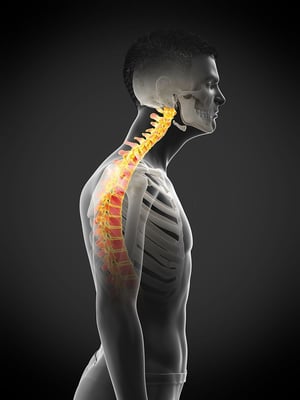
Medical illustration of cervical and upper thoracic spine pain highlighting spinal inflammation, commonly treated with physical therapy.
Poor Posture and Prolonged SittingMaintaining poor posture during computer work, driving, or daily activities places excessive stress on spinal structures. Slouching affects the thoracic spine, while prolonged sitting increases pressure on lumbar discs. Over time, these sustained poor positions lead to chronic muscle tension, fatigue, and persistent discomfort throughout the back.
Older man sitting on a couch holding his lower abdomen, representing abdominal or core pain that may benefit from physical therapy.
Herniated or Bulging Disc

The soft cushions between vertebrae can bulge or rupture, pressing on nearby nerves. This condition causes localized back pain and may produce radiating pain around the chest from thoracic discs or down the legs from lumbar discs. Disc problems can result from aging, injury, or repetitive stress on the spine.
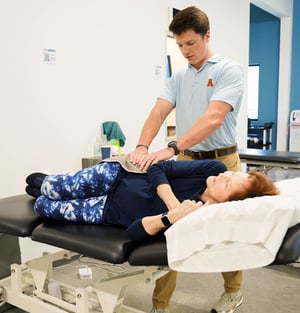
Physical therapist providing hands-on manual therapy to an older adult patient during a treatment session.
Degenerative Disc Disease and Arthritis

As we age, spinal discs lose water content and height, while facet joints develop arthritis. These age-related changes cause stiffness, reduced flexibility, and pain that typically worsens with activity. While degenerative changes appear on imaging in many adults over 50, not everyone with these changes experiences significant symptoms.

Woman sitting in a car holding her lower back in pain.
Facet Joint Pain

The small joints connecting adjacent vertebrae can become painful sources of chronic back pain. These joints can become irritated from arthritis, injury, or repetitive stress, contributing to both mid-back and lower back discomfort.
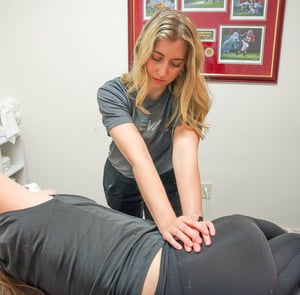
Physical therapist providing hands-on manual therapy to a patient’s lower back during treatment.
Thoracic Spine Conditions

The mid-back, while less mobile than the lower back, can develop pain from poor posture, prolonged computer use, carrying heavy backpacks, or trauma. The thoracic spine is also affected by conditions like osteoporosis, vertebral fractures, and Scheuermann's disease, which causes abnormal curvature during adolescent growth.
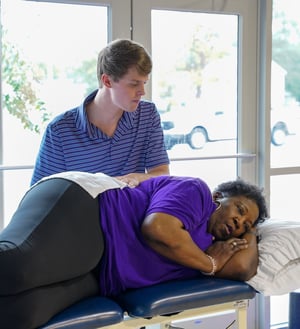
Physical therapist performing hands-on manual therapy to a patient’s lower back while side-lying.
Lumbar Spinal Stenosis

Narrowing of the spinal canal in the lower back puts pressure on nerve roots, causing pain, numbness, and weakness in the lower back and legs. Symptoms often worsen with standing or walking and improve with sitting or leaning forward.
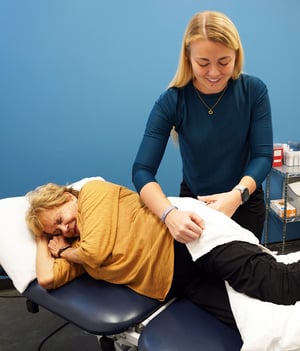
Physical therapist providing hands-on manual therapy to a patient’s hip while side-lying on a treatment table.
Spondylolisthesis

A condition where one vertebra slips forward over the vertebra below it, most commonly occurring in the lumbar spine. This can cause lower back pain and leg pain if nerve compression occurs.

Symptoms of Back Pain

Sharp or Stabbing Pain

Intense, localized discomfort in the mid-back or lower back that may worsen with specific movements or positions, often described as a sudden "catch" or acute pain that limits movement.

Dull, Aching Pain

Constant or intermittent generalized discomfort throughout the back, typically described as soreness, stiffness, or a persistent ache that fluctuates throughout the day and may worsen with prolonged positions.

Muscle Spasms

Sudden, involuntary muscle contractions in the mid-back or lower back, causing temporary severe pain and limited movement, feeling like the back is "locking up" or "seizing," often occurring after movement or prolonged positioning.

Radiating Pain (Radiculopathy)

Pain traveling from the spine into other areas - from mid-back around the chest wall, or from lower back into buttocks and legs - sometimes accompanied by numbness, tingling, or weakness, suggesting nerve involvement.

Stiffness and Reduced Mobility

Difficulty twisting your torso or bending forward and backward, feeling like the spine is "tight" or "frozen," particularly noticeable in the morning or after sitting for long periods.

Pain with Specific Activities

Discomfort in the mid-back or lower back that increases with particular movements such as rotating, lifting, bending, standing from sitting, walking, or reaching, while other positions or activities provide relief.

Numbness or Tingling Altered sensation in the chest, buttocks, or legs, indicating possible nerve irritation or compression, ranging from mild pins-and-needles sensations to complete numbness in specific areas, depending on which area of the back is affected.
Weakness in Legs Difficulty with activities requiring leg strength, such as climbing stairs, standing from a chair, or walking distances, potentially indicating nerve compression or significant muscle inhibition from pain in the lower back.
Pain That Worsens with Breathing Mid-back pain that intensifies with deep breathing or coughing may indicate thoracic spine issues or rib involvement.

The Early Intervention Advantage

Starting physical therapy early for back pain leads to better outcomes than delayed treatment. Research demonstrates that early physical therapy referral from primary care for acute back pain with sciatica significantly reduces disability at 4 weeks, 6 months, and 1 year compared to usual care alone[3]. Early intervention prevents acute pain from becoming chronic, helps patients maintain activity levels, and provides self-management strategies that reduce recurrence risk while avoiding unnecessary imaging and costly interventions.

Risk Factors for Developing Back Pain

Age: Risk increases with age due to degenerative changes in discs and joints, with most age-related back problems beginning after age 30 and becoming more common in those over 50.

Gender: Women consistently report higher rates of back pain compared to men and tend to experience pain for longer durations than men in the same age groups.

Occupation: Jobs requiring heavy lifting, prolonged sitting, repetitive bending, twisting, or exposure to vibration significantly increase risk. Office workers face high rates of mid-back pain from extended computer use, while nurses, construction workers, truck drivers, and manual laborers experience elevated rates of lower back pain.

Poor Physical Fitness: Weak core and back muscles, along with reduced flexibility, make the spine more vulnerable to injury and pain. Sedentary lifestyle and lack of regular exercise contribute to muscle imbalance and poor spinal support.

Excess Body Weight: Carrying extra pounds, particularly around the midsection, places additional stress on the spine and changes spinal alignment. Obesity increases mechanical load on spinal structures and contributes to degenerative changes.

Improper Lifting Technique: Lifting heavy objects using your back instead of your legs, twisting while lifting, or lifting items that are too heavy strains muscles and ligaments, potentially causing acute injury or chronic problems in the lower back.

Smoking: Tobacco use reduces blood flow to spinal structures, impairs healing, accelerates disc degeneration, and increases the risk of osteoporosis. Smokers experience more severe and longer-lasting back pain than non-smokers.

Psychological Factors: Chronic stress, anxiety, depression, and poor coping strategies increase muscle tension, lower pain tolerance, and contribute to persistent back pain. Psychological distress often predicts transition from acute to chronic pain.

Previous Back Injury: History of back pain episodes, spine injuries, or surgery increases vulnerability to future problems. Prior injury may leave residual weakness, altered movement patterns, or structural changes that predispose to recurrence.

Poor Ergonomics: Inadequate workstation setup, poor chair support, and extended sitting in poor positions contribute significantly to both mid-back and lower back pain.

When to See a Doctor Immediately

In most cases of back pain, conservative treatment improves symptoms. However, specific symptoms require urgent medical attention.

Seek immediate care if you experience:

Severe Pain Following Trauma Intense back pain after a car accident, fall from height, or significant impact may indicate fracture, dislocation, or internal injury.
Loss of Bladder or Bowel Control New inability to control urination or bowel movements, combined with lower back pain, indicates possible cauda equina syndrome requiring emergency surgery to prevent permanent neurological damage.
Progressive Leg Weakness Rapidly worsening strength in your legs over hours to days, difficulty walking, or inability to lift your foot suggests advancing nerve compression.
Numbness in the Saddle Region Loss of sensation in the groin, inner thighs, or buttocks area, particularly when combined with bowel or bladder symptoms, indicates possible serious spinal cord or nerve root compression.
Severe Pain with Fever Combination of intense back pain, fever, and chills may indicate spinal infection, such as discitis, osteomyelitis, or epidural abscess, requiring immediate medical evaluation and treatment.
Unexplained Weight Loss with Back Pain

Significant unintentional weight loss accompanying back pain, particularly with night pain that doesn't improve with rest, requires evaluation to rule out serious underlying conditions.

Pain That Worsens at Night Severe back pain that intensifies when lying down or waking you from sleep, especially if accompanied by other concerning symptoms.
Difficulty Walking or Balance Problems New onset of unsteady gait or difficulty with balance, combined with back pain, may indicate spinal cord compression.

How Long Does Back Recovery Last?

The duration of back pain recovery varies based on condition severity, area of the back affected, underlying cause, and treatment approach:

Acute Back Pain (Muscle Strain or Minor Injury)

Acute back pain from muscle strain, ligament sprain, or minor injuries typically improves within a few days to two weeks with appropriate self-care, gentle movement, and activity modification. Most people experience significant relief within the first week, with continued improvement over 4-6 weeks. Maintaining gentle activity rather than prolonged bed rest helps most people return to normal function quickly.

Physical Therapy for Mechanical Back Pain (4-8 Weeks)

Most patients with mechanical back pain experience meaningful symptom improvement within 4-8 weeks of physical therapy. Treatment focuses on manual therapy to restore mobility, therapeutic exercises to strengthen supporting muscles, and education on proper body mechanics. Patients who attend regular sessions and consistently perform home exercises achieve the best outcomes, with many returning to full activities within two months.

Chronic Back Pain Management
(8-12 Weeks)

Chronic back pain that has persisted for more than three months often requires more extended treatment periods. Comprehensive rehabilitation typically takes 8-12 weeks and includes progressive strengthening exercises, flexibility training, pain management strategies, and addressing contributing factors like poor ergonomics or movement patterns. Improvement occurs gradually with consistent effort and long-term lifestyle modifications.

Post-Surgical Rehabilitation (3-6 Months)

Following spinal surgery, such as discectomy, laminectomy, or fusion, patients require structured rehabilitation to restore function safely. Physical therapy typically begins a few weeks post-operatively, starting with gentle range-of-motion exercises and progressing to strengthening. Complete functional recovery usually occurs within 3-6 months, though some restrictions may apply longer, depending on the specific surgical procedure performed.

Back Pain Treatment Options

Treatment Option

Pros

Cons

Physical Therapy • Treats root cause
• Builds strength & mobility
• Long-term strategies
• Prevents recurrence
• Takes time & effort
• Needs ongoing compliance
• Multiple sessions weekly
• May cause soreness
Medication
(NSAIDs, Pain Relievers)
• Relieves pain quickly
• Reduces inflammation
• Available over-counter
• Manages acute pain
• Temporary relief only
• Doesn't fix root cause
• Possible side effects
• Risk of dependency
Chiropractic Manipulation • Quick symptom relief
• Restores joint mobility
• Combines with treatments
• High patient satisfaction
• Effects are temporary
• Needs repeated visits
• Small complication risk
• Shouldn't replace PT

Massage
Therapy

• Releases muscle tension
• Reduces stress
• Improves blood flow
• Complements treatments
• Short-term benefits
• Doesn't build strength
• Requires regular sessions
• Limited insurance coverage
Injections
(Epidural, Facet)
• Significant pain relief
• Aids diagnosis
• Enables therapy
• Condition-specific
• Temporary relief
• Masks symptoms only
• Potential risks
• May need repeats
Surgery • Relieves nerve pressure
• Stabilizes segments
• Fixes structural issues
•Necessary for some conditions
• Serious risks possible
• Long recovery time
• Last resort option
• No pain guarantee

The Bottom Line

  • Back pain affects millions, with lower back pain most common, followed by mid-back discomfort. Many people experience persistent problems lasting months.
  • Early physical therapy referral for acute back pain with sciatica leads to greater improvement in disability and pain intensity compared to standard care alone.
  • Timely intervention demonstrates significant value in addressing back pain effectively, emphasizing the importance of prompt professional assessment and treatment.
  • Many sufferers experience radiating leg pain and nerve symptoms, requiring comprehensive treatment that addresses underlying causes rather than just symptoms.

Intro Title

Prevention Tips for Protecting Your Lower Back

Description. Lorem ipsum dolor sit amet, consetetur sadipscing elitr, sed diam nonumy eirmod tempor invidunt ut labore et
EW_Freemium_400x500-Fan@1x

How to Get Started with Physical Therapy

1
Schedule Your Initial Evaluation
Many insurance plans allow direct access to physical therapy. If needed, contact your primary care provider to request a referral to EW Motion Therapy. Our team can guide you through the referral process and coordinate with your physician.
2
Obtain a Referral
(if required)
Many insurance plans allow direct access to physical therapy. If needed, contact your primary care provider to request a referral to EW Motion Therapy. Our team can guide you through the referral process and coordinate with your physician.
3
Begin Your Recovery Journey
Work with your therapist to progress through structured rehabilitation phases, from pain management to strengthening and functional training. Consistent adherence to your program, including home exercises, is essential for outcomes.

Take The Next Step

Reach out to a referral specialist for more information about programs, insurance, or to request an appointment.
Back Pain

Frequently Asked Questions

How long does physical therapy take for back pain?

Most patients attend physical therapy 2-3 times weekly for 4-8 weeks. Many notice improvement within the first few weeks, regardless of whether the pain is in the mid-back or lower back.

Can back pain go away without treatment?

Acute back pain often improves within days to weeks. However, addressing underlying causes prevents chronic pain and reduces recurrence risk.

Will I need surgery for back pain?

Most back pain responds well to conservative treatment. Surgery is reserved for specific conditions like severe nerve compression or instability.

What exercises help with back pain?

Your physical therapist will prescribe specific exercises based on your condition and which area of your back is affected, typically including core strengthening, flexibility exercises, and movement training.

How can I prevent back pain from returning? Maintaining good posture, practicing proper lifting techniques, performing regular core and back strengthening exercises, managing weight, optimizing ergonomics, and avoiding prolonged static positions significantly reduce recurrence risk.
Show Sources
  1. [1] Leboeuf-Yde, C., Nielsen, J., Kyvik, K. O., Fejer, R., & Hartvigsen, J. (2009). Pain in the lumbar, thoracic or cervical regions: do age and gender matter? A population-based study of 34,902 Danish twins 20-71 years of age. BMC Musculoskeletal Disorders, 10, 39. Retrieved from https://pubmed.ncbi.nlm.nih.gov/19379477/ 
  2. [2] Briggs, A. M., Smith, A. J., Straker, L. M., & Bragge, P. (2009). Thoracic spine pain in the general population: prevalence, incidence and associated factors in children, adolescents and adults. A systematic review. BMC Musculoskeletal Disorders, 10, 77. Retrieved from https://pubmed.ncbi.nlm.nih.gov/19563667/
  3. [3] Fritz, J. M., Lane, E., McFadden, M., Brennan, G., Magel, J. S., Thackeray, A., ... & Greene, T. (2021). Physical therapy referral from primary care for acute back pain with sciatica: A randomized controlled trial. Annals of Internal Medicine, 174(1), 8-17. Retrieved from https://pubmed.ncbi.nlm.nih.gov/33017565/