Skip to content
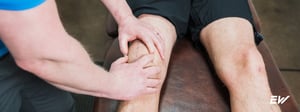
Patient receiving physical therapy for knee pain, undergoing hands-on manual treatment to improve joint mobility and reduce pain.
Sep 7, 2026, 5:05:07 PM11 min read

Knee Pain Treatment & Recovery

Knee Pain Treatment & Recovery
17:03

Key Takeaways

  1. Approximately 25% of adults are impacted by knee pain[1]
  2. Physical therapy effectively reduces pain and improves function for most knee conditions
  3. Conservative treatment combining exercise and manual therapy produces significant functional improvements

Living with knee pain doesn't mean giving up the activities you love. Learn rehab strategies that relieve pain, improve movement, and help you get back to your normal daily activities.


Knee Pain Explained

Knee pain involves discomfort in the body's largest joint, which includes bones, cartilage, ligaments, tendons, and bursae that support weight and enable movement. Pain can affect the front, back, or sides of the knee and ranges from mild discomfort during activities to severe pain interfering with walking or resting. Symptoms may be sharp with movement or dull and constant, developing suddenly from injury or gradually from repetitive stress and degenerative changes.

Your knees bear full body weight with every step while allowing bending, straightening, and rotating. Activities involving jumping, squatting, or direction changes create additional stress. Prolonged sitting, excess weight, and high-impact activities without conditioning contribute to knee problems. While many conditions improve with treatment, neglecting symptoms can lead to progressive damage and significant mobility limitations.


Knee Pain

By The Numbers

25%
of Adults
affected by knee pain[1]
6 - 12
Weeks
Timeline for meaningful improvement with physical therapy
44.7%
Estimated
lifetime risk of developing symptomatic knee osteoarthritis[2]

Common Causes of Knee Pain

Understanding the source of your knee pain guides appropriate treatment decisions and helps prevent future problems. While injuries account for many cases, most knee pain develops from cumulative stress and biomechanical issues.
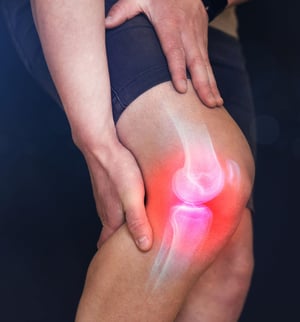
Person holding a painful knee with highlighted inflammation.
Patellofemoral Pain Syndrome (Runner's Knee) The most common cause of anterior knee pain involves irritation of the cartilage under the kneecap. This condition develops when the patella doesn't track properly in its groove, often due to muscle imbalances, tight structures, or training errors. Pain typically worsens with stairs, squatting, or prolonged sitting with bent knees.
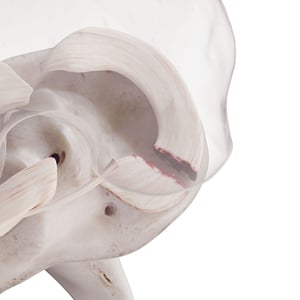
Medical illustration of a shoulder joint showing cartilage damage.
Meniscus TearsThe menisci are C-shaped cartilage cushions that absorb shock between your thighbone and shinbone. Tears can occur from sudden twisting movements or develop gradually from degenerative changes. Symptoms include pain along the joint line, swelling, catching sensations, or difficulty fully straightening the knee.
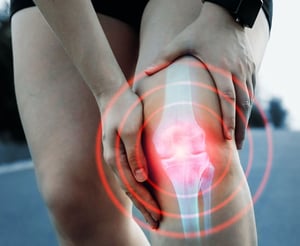
Person holding a painful knee, with highlighted knee joint.
Ligament Injuries

The knee contains four major ligaments that provide stability. The anterior cruciate ligament (ACL) and medial collateral ligament (MCL) are most commonly injured through sports activities involving pivoting, sudden stops, or direct impact. These injuries cause immediate pain, swelling, instability, and difficulty bearing weight.
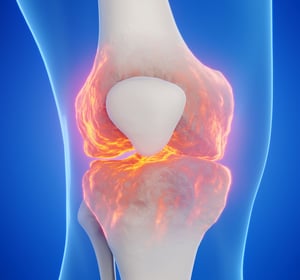
Medical illustration of knee joint inflammation highlighting knee pain and arthritis.
Osteoarthritis

This degenerative joint disease develops when protective cartilage gradually wears away, causing bone-on-bone friction. Osteoarthritis typically affects people over 50, but can occur earlier following injuries. Symptoms include morning stiffness, pain with activity, swelling, reduced range of motion, and grinding sensations during movement.
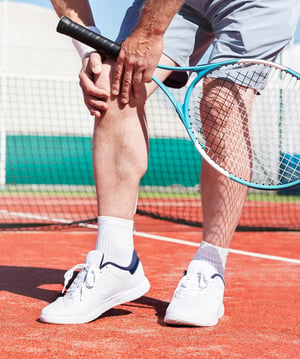
Tennis player holding knee in pain on a court, illustrating a knee injury commonly treated with sports physical therapy.
Tendinitis and Bursitis

Overuse or repetitive stress causes inflammation of tendons (tendinitis) or fluid-filled sacs (bursitis) around the knee. Patellar tendinitis affects the tendon connecting the kneecap to the shinbone, while pes anserine bursitis causes pain on the inner side of the knee below the joint. These conditions create localized tenderness and pain with specific movements.
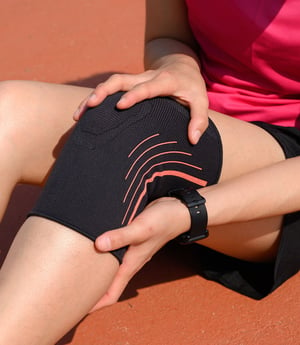
Person holding a knee with a knee brace.
Iliotibial Band Syndrome

The iliotibial band is a thick tissue running along the outer thigh from the hip to the knee. When tight or overused, it rubs against the outer knee bone, causing friction and inflammation. This condition commonly affects runners and cyclists, producing sharp lateral knee pain that worsens during activity.

Symptoms of Knee Pain

Swelling

Fluid accumulation in or around the knee joint causes visible enlargement, tightness, and warmth, making the knee feel puffy and restricted in movement.

Stiffness

Difficulty bending or straightening the knee fully, particularly noticeable after sitting for extended periods or upon waking, limiting daily activities like getting in and out of cars.

Weakness and Instability

Feeling that the knee might buckle or give way during weight-bearing activities, creating uncertainty with walking, especially on uneven surfaces or stairs.

Clicking, Popping, or Grinding

Audible or palpable sensations during knee movement, ranging from harmless noises to painful grinding, indicate cartilage damage or mechanical problems within the joint.

Pain with Specific Activities

Discomfort triggered by particular movements such as climbing stairs, squatting, kneeling, or prolonged standing, with pain patterns often indicating specific underlying conditions.

Redness and Warmth

Heat and color changes around the knee suggest inflammation or infection, distinguishing inflammatory conditions from mechanical problems requiring different treatment approaches.

Limited Range of Motion Inability to fully bend or extend the knee through its standard arc of movement, interfering with walking mechanics, sitting comfortably, and performing routine physical tasks.
Night Pain Aching or throbbing that disrupts sleep, often indicating inflammatory conditions like arthritis or significant internal knee damage requiring comprehensive evaluation and management.

The Early Intervention Advantage

Starting physical therapy early for knee pain produces superior outcomes compared to delayed treatment. Exercise-based physical therapy significantly improves pain, function, and quality of life in patients with knee osteoarthritis while potentially slowing or preventing the need for surgical intervention. Early treatment prevents acute injuries from developing into chronic conditions, reduces reliance on pain medications, and helps patients return to activities faster while building long-term self-management skills that prevent recurrence.

Risk Factors for Developing Knee Pain

Age: Knee pain prevalence increases with age due to cumulative wear on cartilage, ligaments, and tendons. Degenerative changes, such as osteoarthritis, typically emerge after age 50, though prior injuries can accelerate this timeline.

Excess Weight: Every extra pound adds approximately 4 pounds of pressure on knee joints during walking and stair climbing. This increased mechanical stress accelerates cartilage breakdown and inflammation.

Previous Knee Injury: A history of ligament tears, meniscus damage, or fractures significantly increases the risk of developing osteoarthritis and chronic pain, with injured knees aging faster than uninjured ones.

Certain Sports and Activities: High-impact activities such as running, basketball, soccer, and skiing place repetitive stress on the knees. Sports that require jumping, pivoting, or sudden directional changes substantially increase injury risk.

Muscle Weakness or Imbalance: Weak quadriceps, hamstrings, or hip muscles fail to support and stabilize the knee joint adequately, increasing stress on passive structures such as ligaments and cartilage during movement.

Poor Biomechanics: Structural factors, including flat feet, knock-knees, or unequal leg length, alter force distribution through the knee, creating abnormal wear patterns and overload in specific joint areas.

Occupations Requiring Kneeling or Squatting: Jobs involving repeated kneeling, squatting, or lifting heavy objects—such as construction, flooring installation, or gardening—can cause cumulative stress that leads to chronic knee problems.

When to See a Doctor Immediately

Most knee pain improves with conservative care, but certain symptoms indicate severe conditions requiring prompt medical evaluation. 

Seek immediate care if you experience:

Severe Pain and Inability to Bear Weight Intense pain preventing you from putting weight on the leg or taking steps may indicate a fracture, a complete ligament tear, or significant structural damage.
Obvious Deformity Visible abnormality in the knee appearance or position compared to the other knee suggests dislocation, fracture, or complete ligament disruption.
Significant Swelling Within Hours Rapid joint swelling developing within a few hours of injury often indicates bleeding inside the joint from ligament tears or fractures.
Complete Instability Knee buckling or inability to support body weight suggests complete ligament rupture, particularly of the ACL, or multiple ligament injuries.
Signs of Infection Fever, severe warmth, redness spreading beyond the knee, and intense pain with any movement indicate possible septic arthritis or infection.
Locked Knee Complete inability to bend or straighten the knee due to mechanical blockage suggests a displaced meniscus tear or loose body requiring urgent intervention to prevent further damage.
Numbness or Tingling Below the Knee Loss of sensation, or changes in the lower leg or foot accompanying a knee injury may indicate nerve or blood vessel damage.

How Long Does Knee Recovery Last?

Recovery duration for knee pain varies based on diagnosis, severity, treatment adherence, and individual factors:

Short-Term Recovery (1–8 Weeks)

Minor knee injuries such as mild sprains, muscle strains, and overuse pain typically improve within one to two weeks with rest from aggravating activities, ice, light compression, and gradual movement. Conditions such as patellofemoral pain, patellar tendinitis, or IT band syndrome usually show significant improvement within 6 to 8 weeks of targeted physical therapy focused on strengthening, stretching, and correcting movement patterns.

Medium-Term Rehabilitation (3–4 Months)

Recovery after procedures such as a meniscus repair or partial meniscectomy generally follows a structured physical therapy plan. Rehabilitation progresses from protected weight-bearing and restoring range of motion to rebuilding strength and functional movement. Most individuals return to full activity within three to four months, with meniscus repairs requiring slightly longer protection than partial removals.

Long-Term Recovery and Ongoing Management (9 Months and Beyond)

Major surgeries and chronic conditions require extended rehabilitation and long-term strategies. ACL reconstruction typically needs nine to twelve months of progressive physical therapy to restore stability, strength, and sport-specific control. Knee osteoarthritis requires ongoing management, often beginning with eight to twelve weeks of physical therapy and continuing with long-term home exercises and occasional tune-ups to maintain mobility and reduce flare-ups.

Knee Pain Treatment Options

 Treatment Options

 Pros

 Cons

Physical Therapy

  • Fixes movement dysfunction
  • Builds strength/stability
  • Long-term self-management
  • Reduces future injury
  •Needs time commitment
  • Demands active participation
  • May cause discomfort
  • Results take weeks

Medication (NSAIDs, Analgesics) 

  • Quick pain/inflammation drop
  • Available over-counter
  • Manages acute flares
  • Enables early movement
  • Temporary relief only
  • Doesn't fix root cause
  • GI/cardiovascular risks
  • Not sole treatment

Corticosteroid Injections

  • Rapid pain relief
  • Reduces inflammation
  • Facilitates PT
  • Minimally invasive
  • Lasts weeks to months
  • Limited injection count
  • Doesn't stop disease
  • May damage cartilage

Bracing and Taping 

  • Immediate support
  • Unloads joint stress
  • Inexpensive option
  • Useful during return
  • May weaken muscles
  • Creates support dependency
  • Doesn't build strength
  • Can be uncomfortable

Weight Loss and Lifestyle Modification 

  • Reduces joint stress
  • Improves overall health
  • No side effects
  • Benefits beyond knee
  • Needs behavior change
  • Results take time
  • May need extra support
  • Hard to maintain

Arthroscopic Surgery 

  • Repairs structural damage
  • Removes loose fragments
  • Less invasive
  • Quick recovery
  • Surgical/anesthesia risks
  • May not relieve pain
  • Needs post-op rehab
  • Not better than PT

Knee Replacement Surgery

  • Effective for severe cases
  • Major pain relief
  • Restores end-stage function
  • High success rates
 
  • Major surgery risks
  • Lengthy rehab period
  • Limited implant lifespan
  • Last resort option

The Bottom Line

  • Evidence-based guidelines support conservative management for most knee conditions, with physical therapy significantly reducing pain and improving function through therapeutic exercise.
  • Exercise therapy targeting hip and knee strengthening provides superior outcomes compared to passive treatments, addressing root causes of dysfunction rather than masking symptoms.


  • Combined approaches using manual therapy and patient education deliver better results than activity modification alone, helping patients build strength and resilience in affected joints.
  • Early physical therapy intervention prevents acute knee injuries from progressing to chronic pain and equips patients with strategies to manage symptoms independently and prevent recurrence.

Intro Title

Prevention Tips for Protecting Your Lower Back

Description. Lorem ipsum dolor sit amet, consetetur sadipscing elitr, sed diam nonumy eirmod tempor invidunt ut labore et

EW_Freemium_400x500-Fan@1x

Get Started with Physical Therapy

1
Schedule Your Initial Evaluation
Book a comprehensive assessment with an EW Physical Therapist. We'll evaluate your knee range of motion, strength, stability, movement quality, and functional limitations to develop an individualized treatment plan, whether you're managing arthritis, recovering from injury, or addressing chronic overuse pain.
2
Obtain a Referral (if required)
Many insurance plans permit direct access to physical therapy without a physician referral. If your plan requires one, contact your primary care provider to request a referral to EW Motion Therapy. Our administrative team can assist with the referral process and insurance coordination.
3
Begin Your Recovery Journey
Work with your therapist through each rehab stage to move from basic movement and pain relief to rebuilding strength, control, and functional skills. Staying consistent with your program, including home exercises and activity changes, is key to getting the best results and preventing symptoms from returning.

Take The Next Step

Reach out to a referral specialist for more information about programs, insurance, or to request an appointment.
Knee Pain

Frequently Asked Questions

How long does physical therapy take for knee pain?

Most patients initially attend 2-3 sessions per week for 6-8 weeks. Many notice improvement within the first few weeks, though complete recovery depends on the severity of the diagnosis and adherence.

Can knee pain resolve without treatment?

Minor knee pain from mild strains may improve with rest. However, persistent or recurrent knee pain typically requires treatment to prevent worsening and address contributing factors.

Will I need surgery for my knee pain?

Most knee conditions respond well to physical therapy and conservative care. Surgery becomes necessary only for specific structural problems that don't improve with rehabilitation.

What exercises help with knee pain?

Your physical therapist prescribes specific exercises based on your condition. These typically include quadriceps and hip strengthening, flexibility work, balance training, and functional movement patterns.

How can I prevent knee pain from returning? Maintaining muscle strength, practicing proper movement mechanics, managing body weight, wearing appropriate footwear, and performing regular exercise significantly reduce the risk of recurrence after recovery.
Show Sources
  1. Nguyen, U. S., Zhang, Y., Zhu, Y., Niu, J., Zhang, B., & Felson, D.T. (2011). Increasing prevalence of knee pain and symptomatic knee osteoarthritis: survey and cohort data. Annals of Internal Medicine, 155(11), 725-732. Retrieved from https://pmc.ncbi.nlm.nih.gov/articles/PMC3408027/ 
  2. Murphy, L., Schwartz, T. A., Helmick, C. G., Renner, J. B., Tudor, G., Koch, G., ... & Jordan, J. M. (2008). Lifetime risk of symptomatic knee osteoarthritis. Arthritis & Rheumatism, 59(9), 1207-1213. Retrieved from https://pmc.ncbi.nlm.nih.gov/articles/PMC4516049/