

Key Takeaways
- Most elbow pain stems from repetitive movements and overuse rather than acute injuries, developing gradually from activities like gripping, lifting, and computer work.
- Early physical therapy intervention prevents acute elbow pain from becoming chronic and achieves better long-term outcomes than quick fixes like cortisone injections.
- Tennis elbow is the most common cause of elbow pain, affecting many non-athletes through repetitive wrist and gripping motions that create microscopic tendon tears.
- Targeted eccentric strengthening exercises and progressive loading effectively restore elbow function, with most people experiencing meaningful improvement within weeks of consistent treatment.
Living with elbow pain doesn't mean accepting limitations on your daily activities. Discover evidence-based treatment options that can help you return to pain-free movement and improved quality of life through rehabilitation.
Elbow Pain Explained
Elbow pain involves discomfort in the joint connecting your upper arm to your forearm bones. This hinge joint includes muscles, tendons, ligaments, and nerves that enable bending, straightening, and rotation. Pain occurs when these structures become irritated, injured, or overused. Pain ranges from mild discomfort during movement to severe limitations in gripping, lifting, or turning a doorknob. It may be sharp and localized or dull and spreading into the forearm.
Symptoms can develop suddenly from injury or gradually from repetitive motions and overuse. Your elbow is vulnerable because it transmits forces during gripping, lifting, and throwing activities. Most elbow pain improves with conservative treatment, but without proper care, symptoms can persist and impact work, sports, and daily activities.
By The Numbers
Common Causes of Elbow Pain
Understanding what causes elbow pain helps you make informed decisions about treatment and prevention. While some cases result from acute injuries, most develop from repetitive activities and overuse.
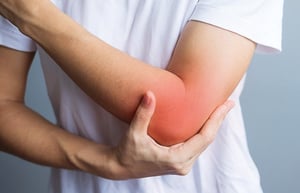

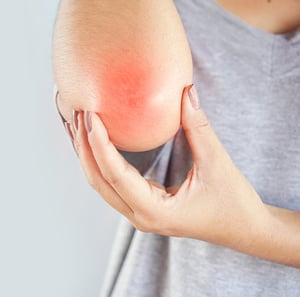
The olecranon bursa, a fluid-filled sac at the tip of the elbow, can become inflamed from direct trauma, prolonged pressure, or infection. People who frequently lean on their elbows, like students, office workers, or those in certain trades, develop swelling, tenderness, and limited elbow bending as the bursa becomes irritated.

The ulnar nerve runs along the inner elbow in a groove called the cubital tunnel. Prolonged elbow bending, direct pressure, or repetitive movements can compress this nerve, causing numbness and tingling in the ring and little fingers, along with elbow pain and hand weakness. This "funny bone" nerve becomes increasingly sensitive with sustained compression.
Sudden forceful movements, falls onto an outstretched hand, or lifting objects that are too heavy can tear or stretch the ligaments and muscles around the elbow. These acute injuries cause immediate pain, swelling, and decreased range of motion. Athletes in throwing sports and manual laborers face a higher risk of these traumatic injuries.
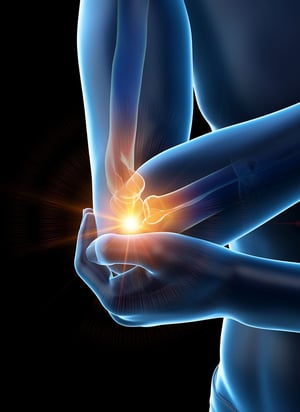
Age-related wear and tear or previous elbow injuries can lead to cartilage breakdown within the elbow joint. This degenerative condition causes stiffness, grinding sensations, and pain with movement. While less common than in weight-bearing joints, elbow arthritis significantly impacts function, particularly in people with a history of elbow fractures or heavy manual labor.
Symptoms of Elbow Pain
Tenderness and discomfort on the lateral (outside) aspect of the elbow that worsens with gripping, lifting objects, or extending the wrist, commonly associated with tennis elbow.
Discomfort on the medial (inside) aspect of the elbow that intensifies with wrist flexion, gripping, or throwing motions, typically indicating golfer's elbow or ulnar nerve issues.
Reduced ability to hold objects firmly, difficulty opening jars, or dropping items due to decreased forearm muscle function and pain with gripping activities.
Abnormal sensations in the ring and little fingers, particularly when the elbow is bent for extended periods, suggesting ulnar nerve compression at the elbow.
Difficulty fully straightening or bending the elbow, feeling of tightness or restriction, especially noticeable in the morning or after periods of rest.
Visible puffiness at the tip of the elbow or throughout the joint area, which may be accompanied by warmth and tenderness to touch.
The Early Intervention Advantage
Starting physical therapy early for elbow pain leads to better outcomes than delayed treatment. Early intervention prevents acute pain from becoming chronic, reduces reliance on pain medications and injections, and helps patients return to normal activities faster while avoiding costly surgical interventions and prolonged disability.
Risk Factors for Developing Elbow Pain
Age: Risk of tendinopathy increases with age, with lateral epicondylitis most common in people aged 45-54 years[4], as tendons lose elasticity and healing capacity.
Occupation: Jobs requiring repetitive hand and wrist movements significantly increase risk. Carpenters, plumbers, painters, butchers, assembly line workers, and computer users face particularly high rates of elbow tendinopathy.
Racquet Sports: Tennis, squash, and racquetball players experience a higher incidence of lateral epicondylitis, especially when technique is poor, grip size is inappropriate, or conditioning and warm-up routines are inadequate.
Manual Labor: Repetitive lifting, gripping, and forceful exertion strain elbow structures. Construction workers, mechanics, and those in trades requiring prolonged tool use develop overuse injuries from cumulative microtrauma.
Poor Technique in Sports or Work: Improper form during athletic activities or workplace tasks can place excessive stress on elbow tendons and ligaments, accelerating tissue damage and the development of pain.
Previous Elbow Injury: A history of elbow trauma, fractures, or dislocations increases vulnerability to future elbow problems, including early degenerative changes, instability, and chronic pain conditions.
Inadequate Conditioning: Weak forearm muscles and poor shoulder stability force the elbow to compensate during activities, placing disproportionate stress on tendons and increasing injury risk during physical demands.
Smoking: Tobacco use impairs blood flow to tendons, reduces oxygen delivery to tissues, slows healing processes, and increases the risk of developing chronic tendinopathy and treatment failure.
When to See a Doctor Immediately
In most cases of elbow pain, conservative treatment improves symptoms. However, specific symptoms require urgent medical attention.
Seek immediate care if you experience:
How Long Does Elbow Pain Last?
- Acute
- Sub-Acute
- Chronic
- Post-Surgical
Acute Elbow Strain or Sprain (1-2 Weeks)
Physical Therapy for Elbow Tendinopathy (8-12 Weeks)
Chronic Elbow Pain Management
(3-6 Months)
Post-Surgical Rehabilitation (4-6 Months)
Elbow Pain Treatment Options
|
Treatment Option |
Pros |
Cons |
|
Physical Therapy |
• Treats root cause • Builds strength & mobility • Long-term strategies |
• Takes time commitment • Needs ongoing compliance • Multiple sessions weekly |
|
Medication (NSAIDs, Pain Relievers) |
• Temporary pain relief • Reduces inflammation • Available over-counter • Manages acute pain |
• Masks symptoms only • Doesn't fix root cause • Side effects possible • Not standalone treatment |
|
Corticosteroid Injections |
• Rapid short-term relief • Quick inflammation drop • Improves function briefly • Helps severe symptoms |
• Effects temporary • No long-term benefit • May weaken tendon • May delay healing |
|
Elbow Bracing or Strapping |
• Reduces tendon stress • Allows activity • Inexpensive & non-invasive • Complements exercise |
• Relief only, not cure • Doesn't build strength • Creates dependency • Needs active treatment |
|
Platelet-Rich Plasma (PRP) Therapy |
• Stimulates healing • Uses own blood • Growing research • Alternative to surgery |
• Expensive, no coverage • Evidence still emerging • Needs multiple shots • Works best with exercise |
|
Surgery |
• Condition-specific • Removes damaged tissue • Releases compressed nerves • Fixes structural issues |
• Serious risks
• Long recovery time • Last resort option • Most improve without it |
The Bottom Line
- Most elbow pain improves with conservative care, and physical therapy is usually the best starting point. Elbow tendon problems are common, especially in midlife adults, with tennis elbow most frequent.
- Targeted exercises and gradual strengthening reduce pain and restore function in people with elbow tendon issues. Many notice real improvement within weeks of starting treatment.
- Strengthening programs work better long-term than cortisone shots, which may ease pain briefly but don't address underlying problems or build lasting resilience in damaged tissues.
- Starting physical therapy early prevents minor injuries from becoming chronic and teaches effective symptom management and prevention strategies for avoiding future flare-ups.
How to Get Started with Physical Therapy
(if required)
Take The Next Step
Reach out to a referral specialist for more information about programs, insurance, or to request an appointment.Frequently Asked Questions
Most patients attend therapy 2-3 times weekly for 8-12 weeks, with home exercises continuing throughout. Many notice improvement within the first few weeks of treatment.
Mild elbow strain may improve with rest. However, chronic conditions like tendinopathy typically require treatment to address underlying tissue dysfunction and prevent worsening symptoms.
Most elbow pain responds well to conservative treatment. Surgery is typically reserved for severe cases that don't improve after several months of physical therapy.
Your physical therapist will prescribe specific exercises based on your diagnosis. These typically include eccentric strengthening, grip exercises, and progressive loading protocols tailored to your condition.
- Degen, R. M., Conti, M. S., Camp, C. L., Altchek, D. W., Dines, J. S., & Werner, B. C. (2018). Epidemiology and Disease Burden of Lateral Epicondylitis in the USA: Analysis of 85,318 Patients. HSS Journal, 14(1), 9-14. Retrieved from https://pmc.ncbi.nlm.nih.gov/articles/PMC5786580/
- Coombes, B. K., Bisset, L., & Vicenzino, B. (2015). Management of lateral elbow tendinopathy: one size does not fit all. Journal of Orthopaedic & Sports Physical Therapy, 45(11), 938-949. Retrieved from https://www.jospt.org/doi/10.2519/jospt.2015.5841
- Buchanan, B. K., & Varacallo, M. A. (2023). Lateral epicondylitis (tennis elbow). In StatPearls [Internet]. Treasure Island, FL: StatPearls Publishing. Retrieved from https://www.ncbi.nlm.nih.gov/books/NBK431092/
- Shiri, R., Viikari-Juntura, E., Varonen, H., & Heliövaara, M. (2006). Prevalence and determinants of lateral and medial epicondylitis: a population study. American Journal of Epidemiology, 164(11), 1065-1074. Retrieved from https://academic.oup.com/aje/article/164/11/1065/61970