

Skip to content
Physical therapist assisting an older adult with balance disorder treatment during supervised physical therapy.
Sep 7, 2026, 5:03:00 PM12 min read

Balance and Fall Risk Treatment & Prevention

Balance and Fall Risk Treatment & Prevention
17:41

Key Takeaways

  1. Balance problems and fall risk affect people of all ages, with targeted physical therapy significantly reducing falls and improving confidence in daily activities 
  2. Early intervention through balance training prevents falls more effectively than waiting until after a fall occurs, reducing injury risk and maintaining independence 
  3. Most balance issues result from muscle weakness, inner ear problems, or medication side effects rather than permanent conditions 
  4. Understanding your fall risk factors and treatment options empowers you to maintain stability, independence, and quality of life

Living with balance concerns doesn't mean accepting fear or limiting your activities. Whether you experience dizziness, unsteadiness, or worry about falling, evidence-based physical therapy can help you regain confidence and stability through comprehensive balance rehabilitation.


Balance and Fall Risk Explained

Balance is your ability to maintain control while standing, walking, or moving. Your balance system relies on vision, inner ear (vestibular system), and sensory feedback from muscles and joints working together. Fall risk refers to your likelihood of losing balance and falling, which can cause fractures, injuries, or loss of independence.

Balance issues manifest as dizziness, unsteadiness, veering while walking, or difficulty on uneven surfaces. You may experience vertigo, lightheadedness, or instability in dim lighting. Without intervention, balance problems worsen as fear of falling reduces activity, weakening muscles and creating a dangerous cycle of declining confidence and increased fall risk.


Balance and Fall Risk

By The Numbers

35.4% of adults over age 40 in the United States have vestibular dysfunction affecting balance[1]
14 million older adults report at least one fall annually[2]
27.6% of adults aged 65 and older fall each year[2]

Common Causes of Balance Problems and Fall Risk

Understanding what causes balance problems helps you make informed decisions about treatment and prevention. While some cases result from specific medical conditions, many develop from treatable factors.
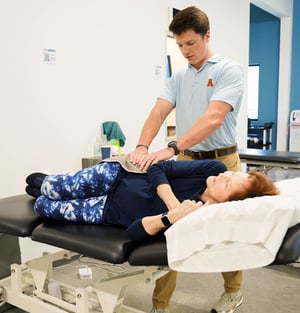

Physical therapist providing hands-on manual therapy to an older adult patient during a treatment session.
Muscle Weakness and DeconditioningWeak leg muscles, particularly in the hips, knees, and ankles, make it difficult to maintain stability and recover from stumbles. Core weakness affects your ability to keep your trunk stable during movement. Physical inactivity and sedentary lifestyle lead to progressive muscle loss, especially in older adults, making everyday activities more challenging and increasing fall risk.
Man experiencing dizziness or head pain, holding his forehead.
Inner Ear Problems (Vestibular Disorders)The vestibular system in your inner ear detects head movement and position. Conditions like benign paroxysmal positional vertigo (BPPV), vestibular neuritis, or Meniere's disease disrupt this system, causing dizziness, vertigo, and balance problems. These disorders make you feel unsteady, particularly with head movements or position changes.
Prescription medication being taken for pain or treatment.
Medication Side Effects

Many common medications affect balance by causing dizziness, drowsiness, or blood pressure changes. Sedatives, antidepressants, blood pressure medications, and taking multiple medications simultaneously (polypharmacy) significantly increase fall risk by affecting coordination, alertness, and reaction time.

Older woman holding her glasses and rubbing her eye due to discomfort or eye strain.
Vision Problems

Poor vision makes it difficult to detect obstacles, judge distances, or navigate uneven surfaces. Cataracts, glaucoma, macular degeneration, or simply outdated eyeglass prescriptions reduce your ability to see environmental hazards. Depth perception problems and poor contrast sensitivity particularly affect stair navigation and dim lighting situations.
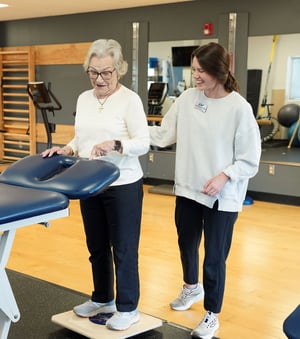
Physical therapist assisting an older adult with balance training during physical therapy.
Neuropathy and Reduced Sensation

Nerve damage, often from diabetes, reduces feeling in your feet and legs. This sensory loss makes it harder to feel the ground beneath you or detect position changes. Without adequate sensory feedback, your brain cannot make quick adjustments needed to maintain balance, especially on uneven surfaces or in darkness.
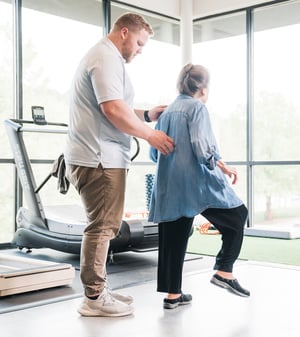
Physical therapist assisting an older adult with balance training during rehabilitation.
Neurological Conditions

Stroke, Parkinson's disease, multiple sclerosis, and other neurological disorders affect the brain's ability to coordinate movement and maintain balance. These conditions may cause muscle weakness, tremors, slow reactions, or impaired coordination, all contributing to increased fall risk and difficulty with daily mobility.

Symptoms of Balance Problems

Dizziness or Lightheadedness

Feeling unsteady, woozy, or like you might faint, particularly when standing up quickly or turning your head, ranging from mild disorientation to severe sensations that force you to sit or hold onto objects for support.

Vertigo

Sensation that you or your surroundings are spinning or moving when you're actually still, often triggered by specific head positions or movements, sometimes accompanied by nausea and making it difficult to stand or walk safely.

Unsteadiness While Walking

Feeling wobbly or unstable on your feet, veering to one side, difficulty walking in a straight line, or needing to touch walls or furniture for support, particularly noticeable on uneven ground or in crowded spaces.

Difficulty with Balance During Position Changes

Increased instability when moving from sitting to standing, bending over and straightening up, or reaching for objects, requiring extra time to steady yourself before moving or feeling like you might fall during transitions.

Vision-Dependent Balance

Significantly worse balance with eyes closed or in dim lighting, difficulty navigating in darkness, or feeling more stable when looking at fixed objects, indicating over-reliance on vision to compensate for other balance system problems.

Fear of Falling

Persistent anxiety about losing balance or falling, leading to activity avoidance, walking more slowly or cautiously, refusing to go outside alone, or limiting social activities due to worry about stumbling or falling.

Frequent Stumbling or Near Falls Catching your foot on objects, tripping over uneven surfaces, feeling like you're about to fall but catching yourself, or experiencing close calls that shake your confidence in your stability.
Difficulty Navigating Obstacles Problems stepping over objects, walking on uneven terrain, climbing stairs, or managing curbs, requiring increased concentration for tasks that previously felt automatic and easy.

The Early Intervention Advantage

Starting physical therapy early for balance problems leads to better outcomes than waiting until after a fall occurs. Exercise interventions substantially reduce both fall rates and fall risk in older adults living independently. Early intervention maintains muscle strength, improves reaction time, builds confidence, and establishes safe movement patterns that prevent injuries while avoiding the physical and psychological trauma of falls.

Risk Factors for Developing Balance Problems and Falls

Age: Balance naturally declines with age due to muscle loss, slower reflexes, reduced sensory feedback, and changes in the vestibular system, with fall risk increasing significantly after age 65.

Previous Falls: History of falling, even once, substantially increases your risk of future falls. Each fall damages confidence, may cause injury that affects movement, and often indicates underlying balance problems requiring attention.

Chronic Health Conditions: Diabetes, arthritis, Parkinson's disease, stroke, heart disease, and thyroid disorders all increase fall risk by affecting strength, sensation, coordination, blood pressure, or overall physical function.
Medications: Taking four or more medications, sedatives, antidepressants, blood pressure medications, or any drugs causing dizziness significantly increases fall risk. Medication interactions and side effects impair balance, coordination, and alertness.

Vision Impairment: Poor eyesight, cataracts, glaucoma, or improper eyeglass prescriptions make it difficult to see obstacles and judge distances. Vision problems particularly increase fall risk on stairs and in unfamiliar environments.

Environmental Hazards: Cluttered homes, poor lighting, loose rugs, slippery floors, lack of handrails, uneven sidewalks, and obstacles in walking paths create situations where balance problems lead to actual falls.

Sedentary Lifestyle: Physical inactivity leads to muscle weakness, reduced flexibility, poor endurance, and diminished balance reactions. Regular exercise maintains the strength and coordination needed to prevent falls.

Foot Problems and Improper Footwear: Painful feet, bunions, numbness, or wearing poorly fitting shoes, high heels, or shoes with slick soles affects stability. Proper supportive footwear is essential for safe walking and fall prevention.

When to See a Doctor Immediately

In most cases of balance problems, evaluation and treatment through physical therapy improves symptoms. However, specific symptoms require urgent medical attention.

Seek immediate care if you experience:

Sudden Severe Dizziness with Headache Intense vertigo or balance loss accompanied by severe headache, particularly if you also have trouble speaking, vision changes, or facial drooping.
Balance Problems After Head Injury New or worsening balance issues following a fall, collision, or blow to the head requires immediate evaluation to rule out concussion, brain bleed, or skull fracture.
Loss of Consciousness or Near Fainting Actual fainting spells or nearly passing out, especially if accompanied by chest pain, shortness of breath, or irregular heartbeat, may indicate serious cardiac or neurological problems.
Sudden Hearing Loss with Dizziness Rapid hearing reduction in one or both ears combined with vertigo or balance problems may signal inner ear damage.
Difficulty Walking or Weakness Sudden inability to walk normally, significant leg weakness, numbness spreading up from feet, or loss of coordination on one side of the body.
Severe Vertigo with Vomiting

Intense spinning sensation lasting hours, accompanied by persistent vomiting that prevents fluid intake, can lead to dangerous dehydration and may indicate serious inner ear or neurological problems.

How Long Does Balance Recovery Last?

The duration of balance recovery varies based on condition severity, underlying cause, age, and treatment approach:

Acute Inner Ear Problems (1-6 Weeks)

Conditions like vestibular neuritis or labyrinthitis typically improve significantly within 1-3 weeks as the inner ear heals, though complete recovery may take 4-6 weeks. Benign paroxysmal positional vertigo (BPPV) often resolves in 1-3 sessions using specific repositioning maneuvers. Most people experience dramatic improvement quickly with appropriate vestibular rehabilitation exercises.

Physical Therapy for General Balance Problems (6-12 Weeks)

Most patients with balance deficits from muscle weakness, inactivity, or mild vestibular issues experience meaningful improvement within 6-12 weeks of targeted balance training. Treatment focuses on progressive exercises challenging stability, strengthening key muscle groups, and practicing functional activities. Patients who attend regular sessions and perform home exercises achieve the best outcomes.

Chronic Balance Disorders (8-16 Weeks)

Long-standing balance problems from neurological conditions, severe deconditioning, or multiple contributing factors often require extended rehabilitation periods. Comprehensive treatment typically takes 8-16 weeks and includes progressive balance training, strengthening exercises, fall prevention strategies, and addressing environmental modifications. Improvement occurs gradually with consistent effort.

Post-Fall Recovery and Reconditioning
(4-12 Weeks)

Following a fall with injury, recovery time depends on injury severity and whether surgery was required. After medical clearance, physical therapy focuses on rebuilding strength, restoring confidence, and preventing future falls. Many patients return to previous function within 4-12 weeks with dedicated rehabilitation effort.

Balance and Fall Risk Treatment Options

 Treatment Option

 Pros

 Cons

Physical Therapy

  • Treats root instability
  • Builds strength & confidence
  • Personalized strategies
  • Evidence-based & lasting
  • Needs consistent effort
  • Home exercises essential
  • Takes several weeks
  • Initially challenging

Vestibular Rehabilitation

  • Fixes inner ear issues
  • Reduces dizziness
  • Improves head tolerance
  • Often rapid relief
  • May worsen dizziness
  • Needs trained therapist
  • Must be individualized
  • Need medical clearance first

Medication Review and Adjustment

  • IDs problem medications
  • Adjusts doses safely
  • Removes drug conflicts
  • Quick intervention
  • Doesn't replace exercise
  • Can't stop all meds
  • Needs MD coordination
  • Some meds ongoing

Assistive Devices (Canes, Walkers)

  • Provides stability support
  • Increases walk confidence
  • Reduces fall risk
  • Useful during recovery
  • Doesn't improve balance
  • Risk of over-reliance
  • Can cause poor posture
  • Complements therapy only

Home Safety Modifications

  • Removes home hazards
  • Simple & cost-effective
  • Safer living space
  • Complements training
  • Doesn't improve function
  • Upfront investment
  • Some changes unfeasible
  • Can't prevent all falls

Vision Correction

  • Helps see obstacles
  • Enhances depth perception
  • Immediate improvement
  • Addresses key risk
  • Doesn't build strength
  • Can't fix all vision
  • Needs regular updates
  • Combine with other steps

The Bottom Line

  • Balance problems and fall risk are significant health concerns affecting people across all age groups. Many adults experience dysfunction that compromises their stability in daily activities, making prevention essential for maintaining mobility and independence.


  • Proactive balance training and fall prevention strategies are far more effective than reactive approaches. Addressing balance problems early through comprehensive physical therapy helps individuals maintain independence, reduce injury risk, and preserve quality of life. Don't wait for a fall before seeking help.
Intro Title

Prevention Tips for Protecting Your Lower Back

Description. Lorem ipsum dolor sit amet, consetetur sadipscing elitr, sed diam nonumy eirmod tempor invidunt ut labore et

EW_Freemium_400x500-Fan@1x

How to Get Started with Physical Therapy

1
Schedule Your Initial Evaluation
Book a comprehensive assessment with an EW Physical Therapist. We'll evaluate your balance systems, strength, gait pattern, fall risk factors, and functional limitations to create a personalized treatment plan addressing your specific needs and goals.
2
Obtain a Referral (if required)
Many insurance plans allow direct access to physical therapy. If needed, contact your primary care provider to request a referral to EW Motion Therapy. Our team can guide you through the referral process and coordinate with your physician.
3
Begin Your Recovery Journey
Work with your therapist to progress through structured balance rehabilitation, from basic stability to advanced dynamic activities. Consistent adherence to your program, including home exercises and safety modifications, is essential for confidence.

Take The Next Step

Reach out to a referral specialist for more information about programs, insurance, or to request an appointment.
Balance and Fall Risk

Frequently Asked Questions

How long does physical therapy take for balance problems?

Most patients attend 2-3 times weekly for 6-12 weeks. Many notice improved stability and confidence within the first month of treatment.

Can balance problems improve without treatment?

Some improve naturally, but targeted therapy significantly reduces fall risk and addresses underlying causes that won't resolve with time alone.

Will I need to use a walker or cane permanently?

Assistive devices provide temporary support during recovery. Many patients reduce or eliminate device dependence through successful balance training.

What exercises help with balance?

Your therapist prescribes specific exercises based on evaluation findings, typically including standing balance challenges, strength training, and functional movement practice.

How can I prevent falls at home? Remove tripping hazards, improve lighting, install grab bars, wear proper footwear, perform regular balance exercises, and maintain strength through physical activity.
Show Sources
  1. [1] Agrawal, Y., Carey, J. P., Della Santina, C. C., Schubert, M. C., & Minor, L. B. (2009). Disorders of balance and vestibular function in US adults: data from the National Health and Nutrition Examination Survey, 2001-2004. Archives of Internal Medicine, 169(10), 938-944. Retrieved from https://pubmed.ncbi.nlm.nih.gov/19468085/
  2. [2] Kakara, R., Bergen, G., Burns, E., & Stevens, M. (2023). Nonfatal and Fatal Falls Among Adults Aged ≥65 Years—United States, 2020–2021. MMWR Morbidity and Mortality Weekly Report, 72(35), 938-943. Retrieved from https://www.cdc.gov/mmwr/volumes/72/wr/mm7235a1.htm
  3. [3] Sherrington, C., Fairhall, N. J., Wallbank, G. K., Tiedemann, A., Michaleff, Z. A., Howard, K., ... & Lamb, S. E. (2019). Exercise for preventing falls in older people living in the community. Cochrane Database of Systematic Reviews, 1(1), CD012424. Retrieved from https://www.cochranelibrary.com/cdsr/doi/10.1002/14651858.CD012424.pub2/full