
Skip to content
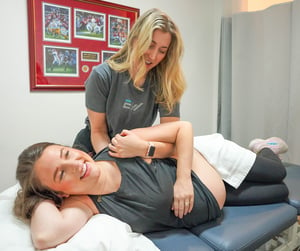
Woman participating in women’s health physical therapy, performing a supervised exercise to improve pelvic floor strength, core stability, and functional movement.
Sep 7, 2026, 5:04:16 PM11 min read

Women's Health Treatment & Recovery

Women's Health Treatment & Recovery
18:15

Key Takeaways

  1. Women's health conditions include pelvic floor dysfunction, diastasis recti, and pregnancy-related pain affecting millions of women with symptoms from urinary incontinence to chronic pelvic discomfort 
  2. Early physical therapy intervention provides better outcomes than delayed treatment, helping prevent chronic complications and restore core function 
  3. Most women's health problems result from pregnancy, childbirth, hormonal changes, or aging rather than serious underlying diseases 
  4. Understanding your symptoms and treatment options helps you take an active role in recovery and long-term pelvic health

Living with women's health challenges doesn't mean accepting permanent limitations. Evidence-based physical therapy can help you return to improved function through targeted rehabilitation for pelvic floor dysfunction, diastasis recti, or pregnancy-related pain.


Women's Health Conditions Explained

 
Women's health conditions occur when pregnancy, childbirth, hormonal changes, or aging affect the pelvic floor and abdominal structures. Pelvic floor dysfunction happens when muscles become weak, tight, or uncoordinated, affecting urinary control, bowel function, and sexual function. When muscles lose coordination, organs may shift, causing pressure, leaking, or prolapse.

Diastasis recti occurs when abdominal muscles separate during pregnancy, creating a gap that persists after delivery. This reduces core strength and may contribute to back pain. Most women's health conditions respond to conservative physical therapy, improving coordination and function.


Women's Health

By The Numbers

23.7% of U.S. women report one or more pelvic floor disorders[1]
60% of women have diastasis recti at 6 weeks postpartum[2]
32.6% of women still have diastasis recti at 12 months postpartum[2]
55.8% of women experience urinary incontinence[3]

Common Causes of Women's Health Conditions

Understanding what causes women's health problems helps you make informed decisions about treatment and prevention. These conditions develop from various mechanisms affecting the pelvic floor and abdominal structures.

Pregnant woman sitting on a yoga mat practicing prenatal exercise, supporting pregnancy wellness and physical therapy care.
Pregnancy and Vaginal DeliveryThe most common cause of pelvic floor dysfunction and diastasis recti involves pregnancy and childbirth. Growing uterine weight places continuous pressure on pelvic floor muscles, while hormones soften connective tissue to allow birth. Vaginal delivery further stretches and sometimes tears pelvic floor muscles. The abdominal wall separates as the belly expands, and longer pushing phases increase the risk.
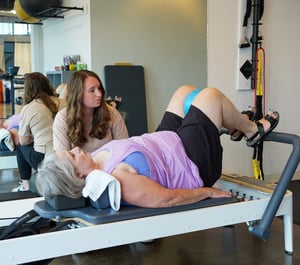
Women’s health physical therapist guiding a patient through a Pilates-based therapeutic exercise, focusing on pelvic floor activation, core strengthening, hip stability, and functional movement as part of women’s health physical therapy.
Hormonal Changes During MenopauseDeclining estrogen during menopause affects pelvic floor muscle coordination, thins vaginal tissue, and reduces connective tissue elasticity. Reduced tissue support allows pelvic organs to shift downward, increases urinary leakage risk, and contributes to vaginal dryness. Women with mild symptoms earlier often notice worsening after menopause.
Women’s health physical therapist working with a pregnant patient in side-lying position, providing prenatal physical therapy to support pelvic alignment, core stability, and relief of pregnancy-related hip and low back pain.
Multiple Pregnancies

Each pregnancy and delivery increases pelvic floor and abdominal wall stress. Women with multiple children experience cumulative tissue stretching. Subsequent pregnancies provide less recovery time between births, and aging between pregnancies reduces tissue resilience. Multiple vaginal deliveries particularly increase prolapse and severe incontinence.
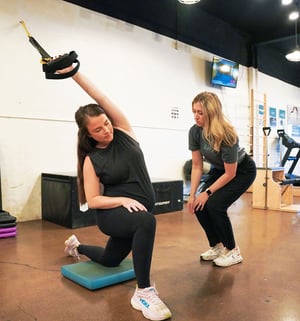
Women’s health physical therapist coaching a patient through a functional strength exercise using suspension straps, focusing on core stability, pelvic control, hip strength, and safe movement as part of women’s health physical therapy.
Chronic Increased Abdominal Pressure

Ongoing activities or conditions that repeatedly increase pressure on pelvic floor muscles cause gradual dysfunction over time. Chronic constipation requiring straining, persistent coughing, heavy lifting occupations, and high-impact exercise without proper core engagement all contribute. Obesity adds constant downward pressure on pelvic structures, accelerating the development.
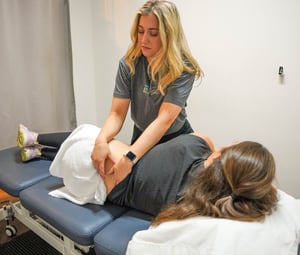
Women’s health physical therapist providing hands-on manual therapy to the pelvic and hip region, addressing pelvic floor dysfunction, low back pain, and core stability as part of individualized women’s health physical therapy.
Instrumental Delivery and Birth Trauma

Forceps or vacuum-assisted deliveries increase pelvic floor injury risk beyond normal vaginal delivery. These interventions stretch and sometimes tear muscles more than spontaneous delivery. Significant perineal tearing during delivery creates lasting pelvic floor dysfunction and bowel control problems requiring specialized rehabilitation.

Lower abdominal area with a visible C-section scar, related to postpartum recovery.
Cesarean Section and Surgical Interventions

While cesarean delivery avoids vaginal stretching, pregnancy itself causes pelvic floor changes. Cesarean delivery increases diastasis recti risk as surgical incisions affect the abdominal wall. Multiple cesarean deliveries, hysterectomy, and other pelvic surgeries create scar tissue affecting muscle function and may affect nerves supplying pelvic floor muscles.

Symptoms of Women's Health Conditions

Urinary Incontinence

Involuntary urine leakage ranging from drops during coughing, sneezing, or exercise to strong, sudden urges requiring immediate bathroom access, significantly impacting daily activities.

Pelvic Organ Prolapse

Sensation of pressure, bulging, or something falling out of the vagina, often worsening with prolonged standing or physical activity, sometimes visible as tissue protruding from the vaginal opening.

Diastasis Recti

Visible abdominal separation or doming along the midline when rising from lying down, creating a belly bulge that persists despite weight loss, often accompanied by core instability.

Pelvic Pain

Aching, sharp, or burning pain in the lower abdomen, pelvis, hips, or lower back, which may be constant or intermittent, worsening with activity, prolonged sitting, or intercourse.

Fecal Incontinence

Difficulty controlling bowel movements or gas, ranging from occasional soiling to complete loss of control, causing significant distress and limiting social activities.

Low Back and Hip Pain

Persistent discomfort in the lower back, sacrum, or hip regions related to core instability, pelvic dysfunction, or muscle imbalances from pregnancy or childbirth.

Painful Intercourse Discomfort, burning, or sharp pain during or after intercourse, often related to pelvic floor muscle tightness, vaginal tissue changes, or muscle incoordination.
Core Instability Difficulty with trunk control, balance during activities, lifting, or transitioning from sitting to standing, often related to abdominal muscle separation or reduced deep core coordination.

The Early Intervention Advantage

Starting physical therapy early for women's health conditions leads to superior outcomes versus delayed treatment. Early rehabilitation prevents acute postpartum symptoms from becoming chronic dysfunction, restores proper muscle activation patterns before compensation develops, and provides education for safe return to exercise. For pelvic floor dysfunction, early intervention prevents progression to more severe prolapse or incontinence, reduces the need for surgical procedures, and improves quality of life.

Risk Factors for Developing Women's Health Conditions

Vaginal Delivery: Strongest risk factor for pelvic floor dysfunction. Longer pushing phases, larger babies, and instrumental deliveries increase risk. Each additional vaginal delivery compounds tissue stretching.

Multiple Pregnancies: Each pregnancy increases cumulative stress on the pelvic floor and abdominal wall. Women with three or more children face significantly higher dysfunction rates than those with one or two.

Age and Menopause: Risk increases with age due to tissue changes, hormonal shifts, and cumulative effects of childbirth. Postmenopausal women experience more severe symptoms as estrogen declines.

Obesity: Excess weight creates constant downward pressure on pelvic floor muscles, accelerating dysfunction. Higher body mass index increases all pelvic floor disorder types and diastasis recti severity.

Chronic Constipation: Repeated straining during bowel movements progressively affects pelvic floor muscles and stretches connective tissue. Ongoing constipation significantly increases prolapse and incontinence.

Heavy Lifting and High Impact Activities: Occupations or recreational activities requiring frequent heavy lifting, jumping, or running increase pelvic floor stress. These activities without proper core engagement accelerate dysfunction.

Connective Tissue Disorders: Conditions affecting collagen and tissue elasticity increase susceptibility to pelvic floor dysfunction and prolapse through altered tissue support.

Chronic Cough: Persistent coughing from smoking, asthma, or chronic respiratory conditions repeatedly increases abdominal pressure, progressively affecting pelvic floor coordination and increasing incontinence risk.

When to See a Doctor Immediately

Most women's health conditions improve with conservative treatment. However, specific symptoms indicate serious problems requiring urgent medical attention.

Seek immediate care if you experience:

Severe Pelvic Pain Sudden, intense pelvic pain with fever, abnormal bleeding, or vomiting may indicate infection, ectopic pregnancy, ovarian torsion, or other emergencies.
Heavy Vaginal Bleeding Excessive bleeding soaking through multiple pads hourly, large blood clots, or bleeding accompanied by dizziness suggests possible hemorrhage.
Signs of Infection Fever with pelvic pain, foul-smelling vaginal discharge, painful urination with fever, or flu-like symptoms with pelvic discomfort may indicate a serious pelvic infection.
Complete Urinary Retention Inability to empty bladder, painful bladder fullness, or complete inability to urinate requires immediate evaluation to prevent bladder and kidney damage.
Prolapse Beyond Vaginal Opening Pelvic organs protruding significantly outside the body, unable to be reduced, particularly if painful or accompanied by bleeding.
Postpartum Warning Signs

Severe abdominal pain, heavy bleeding with large clots, high fever, severe headache with vision changes, or chest pain after delivery indicate potential complications.

Severe Abdominal Separation Large diastasis recti with severe pain, visible herniation of internal organs, or inability to engage core muscles may indicate a hernia.
Bowel Obstruction Symptoms Severe abdominal pain, distension, inability to pass gas or stool, persistent vomiting, particularly after pelvic surgery, may indicate bowel obstruction.

How Long Does Women's Health Recovery Last?

Recovery duration varies based on severity, specific diagnosis, time since childbirth, underlying causes, and treatment approach:

Postpartum Pelvic Floor Recovery (12-16 Weeks)

Most new mothers experiencing mild to moderate pelvic floor dysfunction benefit from starting physical therapy 6 weeks postpartum. Structured rehabilitation focusing on gentle pelvic floor retraining, breathing techniques, and gradual return to activity typically produces meaningful improvement within 12-16 weeks.

Diastasis Recti Rehabilitation (12-24 Weeks)

Abdominal separation responds to targeted core strengthening, proper breathing mechanics, and functional movement retraining over 12-24 weeks. Larger separations or delayed treatment may require longer rehabilitation. Most women see a visible reduction and improved core function within three to six months.

Pregnancy-Related Pain Management (6-12 Weeks)

Pelvic girdle pain, low back discomfort, and other pregnancy-related musculoskeletal problems typically improve within 6-12 weeks of physical therapy. Treatment includes manual therapy, specific exercises, and body mechanics education.

Chronic Pelvic Pain Rehabilitation (12-20 Weeks)

Pelvic floor muscle dysfunction causing chronic pain requires comprehensive treatment, including manual therapy, relaxation techniques, and postural correction. Meaningful symptom reduction typically occurs over 12-20 weeks.

Post-Surgical Rehabilitation (8-16 Weeks)

Following pelvic reconstructive surgery or cesarean delivery with complications, structured physical therapy typically begins several weeks postoperatively. Progressive strengthening and functional training occur over 8-16 weeks, with complete recovery extending to six months.

Women's Health Treatment Options

Treatment Option

Pros

Cons

Physical Therapy

  • Fixes muscle dysfunction
  • Improves core/pelvic floor
  • Long-term strategies
  • Evidence-based treatment
  • Needs time commitment
  • Home exercises essential
  • 2-3 weekly visits initially
  • Initially challenging

Pelvic Floor Muscle Training

  • Improves muscle control
  • Enhances bladder/bowel
  • Reduces prolapse symptoms
  • Independent long-term
  • Needs proper technique
  • Takes weeks of practice
  • May need internal exam
  • Not sole severe treatment

Hormone Replacement Therapy

  • Improves tissue health
  • Reduces vaginal dryness
  • Improves mild symptoms
  • Addresses menopause
  • Doesn't improve coordination
  • Side effects/health risks
  • Not for all women
  • Needs medical monitoring

Pessary Device

  • Immediate prolapse relief
  • Nonsurgical, removable
  • Allows activity/exercise
  • Long-term or temporary
  • Needs proper fitting
  • Requires maintenance
  • May cause irritation
  • Doesn't improve coordination

Core and Postural Training

  • Improves diastasis recti
  • Reduces back pain
  • Enhances movement quality
  • Applies to daily life
  • Needs new movement patterns
  • Takes time to retrain
  • May feel awkward
  • Needs consistent practice

Surgery

  • Significant symptom relief
  • Needed for severe cases
  • Restores anatomy
  • Improves quality of life
  • Serious surgical risks
  • Recurrence rates exist
  • Not first-choice treatment
  • No complete resolution

The Bottom Line

  • Women's health conditions affect millions across all life stages. Physical therapy improves symptoms and restores function for pelvic floor dysfunction and pregnancy-related concerns.
  • Treatment includes pelvic floor training, core strengthening, manual therapy, postural retraining, and functional exercise tailored to individual needs throughout recovery.
  • For persistent conditions, physical therapy combined with medical management provides comprehensive care that addresses both symptoms and underlying causes effectively.
  • Early rehabilitation addresses muscle dysfunction, improves quality of life, prevents symptom progression, and reduces surgical needs while supporting long-term health.
Intro Title

Prevention Tips for Protecting Your Lower Back

Description. Lorem ipsum dolor sit amet, consetetur sadipscing elitr, sed diam nonumy eirmod tempor invidunt ut labore et

EW_Freemium_400x500-Fan@1x

How to Get Started with Physical Therapy

1
Schedule Your Initial Evaluation
Book a comprehensive assessment with an EW Physical Therapist specializing in women's health. We'll evaluate your pelvic floor function, core strength, posture, and movement patterns to create a personalized plan for your specific condition.
2
Obtain a Referral (if required)
Many insurance plans allow direct access to physical therapy. If needed, contact your primary care provider or obstetrician to request a referral to EW Motion Therapy. Our team can guide you through the referral process and coordinate with your physician.
3
Begin Your Recovery Journey
Work with your therapist to progress through rehabilitation phases, from assessment to muscle retraining, strengthening, and return to activities. Consistent adherence to your program, including home exercises and proper mechanics, is essential.

Take The Next Step

Reach out to a referral specialist for more information about programs, insurance, or to request an appointment.
Women's Health

Frequently Asked Questions

How long does physical therapy take for women's health conditions?

Most women attend therapy 2 to 3 times weekly for 8 to 16 weeks, noticing improvement within several weeks.

Can diastasis recti heal on its own?

Some separation naturally reduces after delivery, but targeted exercise accelerates recovery. Larger separations typically require physical therapy for optimal healing.

Is pelvic floor physical therapy painful?

Treatment should not be painful. Therapists work within your comfort zone using gentle techniques. Some temporary muscle soreness from exercises is normal.

When should I start physical therapy after delivery?

Most women can safely begin gentle exercises immediately postpartum and progress to formal therapy at 6 weeks. An earlier evaluation may be appropriate for complications.

Will I need surgery for pelvic floor dysfunction? Most women improve significantly with conservative physical therapy. Surgery is considered only for severe prolapse or incontinence not respond adequately to rehabilitation.
Show Sources
  1. Nygaard, I., Barber, M. D., Burgio, K. L., Kenton, K., Meikle, S., Schaffer, J., ... & Pelvic Floor Disorders Network. (2008). Prevalence of symptomatic pelvic floor disorders in US women. JAMA, 300(11), 1311-1316. Retrieved from https://pubmed.ncbi.nlm.nih.gov/18799443/
  2. Sperstad, J. B., Tennfjord, M. K., Hilde, G., Ellström-Engh, M., & Bø, K. (2016). Diastasis recti abdominis during pregnancy and 12 months after childbirth: prevalence, risk factors and report of lumbopelvic pain. British Journal of Sports Medicine, 50(17), 1092-1096. Retrieved from https://pubmed.ncbi.nlm.nih.gov/27324871/
  3. Peinado-Molina, R. A., Hernández-Martínez, A., Martínez-Vázquez, S., Rodríguez-Almagro, J., & Martínez-Galiano, J. M. (2023). Pelvic floor dysfunction: prevalence and associated factors. BMC Public Health, 23(1), 2005. Retrieved from https://pubmed.ncbi.nlm.nih.gov/37838661/